
Fluid-applied Resources

Published by Eileen Ybarra on January 20, 2026
Winter doesn’t need to cause a dramatic roof failure to do real damage. For commercial and industrial buildings, cold temperatures, snow, ice, wind, and freeze-thaw cycles can quietly compromise roofing systems—often without immediate interior leaks.
As temperatures rise, facility managers and building owners ask the same critical question: What damage did winter do to my roof—and what should I do next?
Below, we break down the most common types of winter-related commercial roof damage, why it matters, and how fluid-applied roofing systems can mitigate issues before they become costly failures.
Common Types of Winter Damage to Commercial Roofs
Here are 5 common types of winter damage to commercial roofs that are essential to know.
1. Freeze-Thaw Damage to Roof Membranes
When moisture enters small cracks, seams, or penetrations and repeatedly freezes and thaws, the membrane expands and contracts. Over time, this can:
- Widen existing cracks
- Stress seams and transitions
- Accelerate membrane failure
Freeze-thaw damage is one of the leading causes of springtime roof leaks.
Winter doesn’t need to cause a dramatic roof failure to do real damage. For commercial and industrial buildings, cold temperatures, snow, ice, wind, and freeze-thaw cycles can quietly compromise roofing systems—often without immediate interior leaks.
2. Ponding Water from Snow and Ice Melt
Melting snow and ice often reveals drainage problems that went unnoticed during winter. Ponding water can:
- Degrade roofing materials faster
- Add unnecessary structural load
- Increase the likelihood of leaks
Water that remains on a roof longer than 48 hours is a warning sign that should not be ignored.
3. Flashing Failures Around Roof Penetrations
Flashing protects the most vulnerable areas of your roof. For example, HVAC units, vents, walls, and edges. Winter conditions can cause flashing to:
- Crack due to temperature swings
- Pull away from vertical surfaces
- Lose adhesion
Flashing failures are responsible for a significant percentage of commercial roof leaks.
4. Membrane Shrinkage and Brittleness
Cold temperatures can reduce the flexibility of aging roof membranes, leading to:
- Shrinkage at seams and edges
- Splits or tears
- Reduced overall durability
This damage often progresses slowly and goes unnoticed until water intrusion occurs.
5. Wind Uplift and Edge Damage
Winter storms frequently bring high winds that can loosen:
- Roof edges and coping
- Fasteners
- Perimeter metal
Even minor movement can compromise the roof system’s ability to resist future storms.
Why Post-Winter Roof Damage Should Be Addressed Early
Ignoring winter-related roof damage can result in more complications like:
- Interior leaks and insulation saturation
- Mold growth and air quality concerns
- Higher heating and cooling costs
- Shortened roof lifespan
- Premature full roof replacement
A proactive post-winter evaluation allows building owners to control costs, rather than reactively handling issues as they arise.
How Fluid-applied Roofing Systems Mitigate Winter Damage
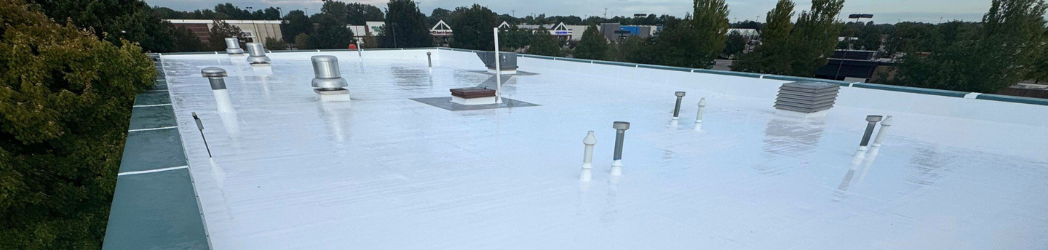
When winter exposes vulnerabilities in a commercial roof, fluid-applied roofing systems are often the most effective solution.
Benefits of fluid-applied roofing systems:
- Seamless application eliminates common leak points
- High flexibility accommodates ongoing thermal movement
- Strong adhesion reinforces existing roof substrates
- Reflective properties improve energy efficiency
- Minimal disruption during installation
Rather than replacing your entire roof, fluid-applied roofing systems can restore, waterproof, and extend existing lifespan.
Why Work with White Hat Industrial After Winter
Not all winter damage is obvious, and not every roof requires replacement. Our team of specialists at White Hat Industrial provides independent, owner-focused consulting to help you make informed decisions.
Our team of experts can help you:
- Identify hidden winter-related roof damage
- Determine whether repair, restoration, or replacement is appropriate
- Evaluate fluid-applied roofing systems objectively
- Protect your commercial roof as a long-term asset
Ultimately, a partnership with us can ensure you reduce risk, manage lifecycle costs proactively, and boost long-term property performance.
Pro Tip: Schedule a post-winter roof assessment in early spring to identify concerns before they worsen. By doing this, you will have more options to mitigate the issue and potentially lower costs.
Additional Frequently Asked Questions
Can winter damage a commercial roof without leaks?
Yes, many forms of damage, such as membrane shrinkage or flashing separation, can occur without immediate leaks and lead to failure in the future.
How do I know if my commercial roof has freeze-thaw damage?
Signs of freeze-thaw damage include cracked seams, loose flashing, surface splits, and new ponding areas. A professional inspection by an expert is always the best way to determine actual damage.
Are fluid-applied roofing systems good for older roofs?
Fluid-applied roofing systems are a great, cost-effective option for older roofs as long as they are structurally sound without major saturation issues.
Is it better to repair winter damage or replace the entire roof?
This will often depend on the current condition of the roof. If you’re unsure, it’s best to consult with a trusted partner to identify the best pathway forward for your commercial roof.
Want to work with a fluid-applied roof restoration specialist?
Our team of fluid-applied specialists works with customers nationwide to provide high-performing roofing solutions.
Simply call us at 937.909.9030 or contact us via email. You can also follow us on LinkedIn and Facebook to learn more about us and our work.
Related Articles
Is Now the Right Time of Year to Restore a Commercial Roof?
Timing matters for commercial roof restoration. Things like weather, roof condition, budget cycles, and operational needs all play a role...

What Are the Signs My Commercial Roof Is Failing?
Commercial roofs rarely fail all at once. More often, they send early warning signs that are subtle at first, then...

How Do I Prevent Leaks Before Spring Rain Season?
Spring rain has a way of revealing problems that developed quietly over winter. For commercial building owners and facility managers,...