
Fluid-applied Resources
Published by Eileen Ybarra on September 15, 2025
Fluid-applied roofing systems are quickly becoming a top solution for commercial and industrial buildings seeking long-lasting, energy-efficient, and cost-effective roof restoration.
In this article, our team defines what a fluid-applied roofing system is, when you can use a fluid-applied roofing system, and the benefits you can gain when choosing a new fluid-applied roofing system for your property.
What is a Fluid-applied Roofing System?
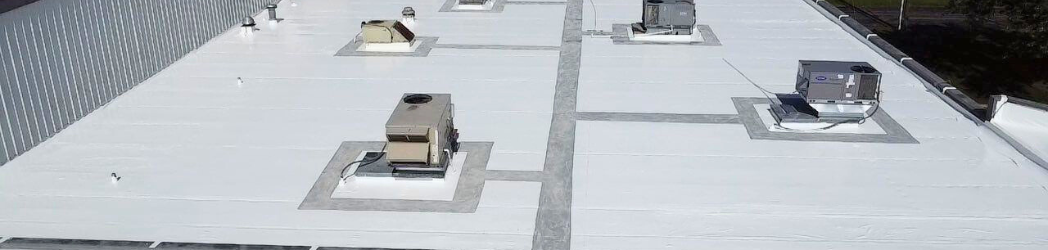
A fluid-applied roofing system is a seamless, waterproof membrane that can be applied directly to the surface of an existing roof in liquid form. Once cured, this fluid-liquid membrane becomes fully adhered to the roof’s surface. This creates a high-performing, durable barrier that protects against UV rays, ponding water, extreme weather conditions, and other environmental factors that may be present.
But can a fluid-applied roofing system be applied to any existing roof substrate? The answer is no. However, these solutions are viable options for most commercial roofs, as they do work on metal, modified bitumen, ethylene polyurethane diene monomer (EPDM), ballast, thermoplastic polyolefin (TPO), and polyvinyl chloride (PVC).
Common Use Cases for These Solutions
Inherently, fluid-applied roofing systems are ideal for restoring, not replacing, existing commercial roofs because they offer a solution to save the good and resolve the bad.
Below are some common reasons why using these solutions makes sense:
- Current Condition. If the roof is aging and only a minimal part of the roof is experiencing saturation, fluid-applied roofing systems can restore the surface and extend the lifespan by 15-20 years.
- Minimal Disruption. If a roof is in a high-traffic area or experiences high volumes of people coming in and out daily, fluid-applied roofing systems offer minimal disruptions because there is no need for a complete removal of the existing substrate.
- Sustainability. If a company or organization commits to achieving sustainable goals, fluid-applied roofing systems can help them reduce waste to landfill, improve energy efficiency via roof temperature reductions, and more.
While these are common reasons why fluid-applied systems make sense for commercial properties, it’s important to remember that no roof is the same. This makes it critical to work with a partner who knows what they’re doing.
Note: Our team of experts at White Hat Industrial install fluid-applied roofing systems nationwide 100% of the time, and are always here to help you find the best solution for your roof.
Key Benefits of Fluid-applied Roofing Systems
There are numerous benefits you can gain from using fluid-applied roofing systems, including:
- Seamless Restoration. The design is seamless, and therefore inherently eliminates potential leak issues often caused by expansion and contraction.
- Lifespan Extension. The solution adds 15-20 years of viability to existing roofs, allowing you to get more out of your property.
- UV and Weather Resistance. The composition of these systems and their white coloration provide resistance against UV and severe weather damage.
- Comprehensive Warranty. The warranty you get with these solutions should be as comprehensive, if not more comprehensive than what you’ve received before (especially when you work with an industry leader like White Hat Industrial).
- Cost Effectiveness. The cost benefits can be extensive, depending on the size of the existing roof, because there is no need for a complete removal of the existing substrate.
- Sustainable Value-adds. The sustainable value-adds with reduced waste to landfill and on-site temperature reductions can offer additional positive impacts.
But why would anyone choose not to use fluid-applied roofing systems with benefits like these?
Well, the answer is simple: fluid-applied solutions is for most roofs, but not for every roof.
For example, if your commercial roof is structurally sound, but experiencing minor leaks or deterioration, fluid-applied roofing systems could be the perfect solution. However, if your roof is not structurally sound and is experiencing extensive leaks, it may be past the point of restoration. All this to say, you should use these whenever you can, but should recognize the limitations.
Ultimately, fluid-applied roofing systems offer a smart, sustainable alternative to traditional roof replacement options. And from the seamless design to their ability to provide lifespan extension, it’s hard to ignore the value these solutions offer. Still, for the best results, it’s beneficial to partner with an industry expert like White Hat Industrial.
Interested in exploring your options with White Hat Industrial?
Our team of roof restoration specialists is happy to help you get the best fluid-applied roofing solutions for your properties nationwide.
Simply call us at 937.909.9030 or contact us via email. You can also follow us on LinkedIn and Facebook to learn more about us and our work.
Related Articles

Can Temporary Roof Repairs Last Through Storms?
Temporary roof repairs are a useful tool, but they’re often misunderstood. At White Hat Industrial, we’ve been called to buildings...

Should I Get My Roof Inspected After Every Major Storm?
The short answer is: not necessarily after every storm, but absolutely after any storm that meets certain thresholds. At White...

How Do I Know If a Storm Damaged My Commercial Roof?
After a major storm passes through, most commercial building owners look at their roof from the parking lot and see...