
Fluid-applied Resources
Published by Eileen Ybarra on March 31, 2025
When maintaining a commercial or industrial roof, building owners often face a crucial decision: should they restore their existing roof with a fluid-applied solution or opt for a complete replacement? While both options have their merits, understanding the key differences of fluid-applied restoration vs. traditional replacement can save you significant time and money while extending the lifespan of your structure.
At White Hat Industrial, we specialize in helping businesses make the most cost-effective and durable roofing decisions. In this article, we’ll break down the benefits of fluid-applied restoration compared to traditional replacement and provide educational insights into why you should choose restoration whenever possible.
What is Fluid-applied Restoration?
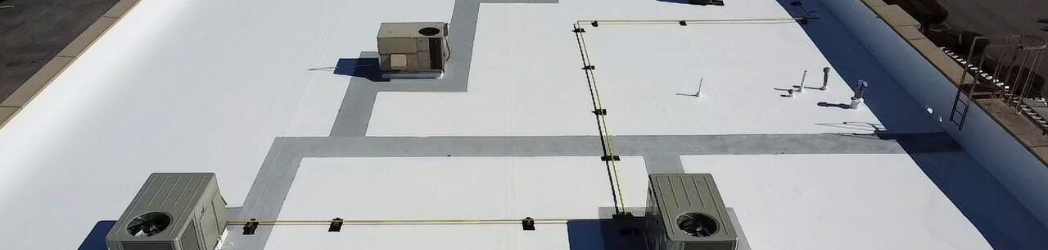
Fluid-applied roof restoration is a process that involves cleaning, repairing the bad, saving the good, and applying a fluid-applied membrane to an existing roof to improve its performance and longevity. Unlike a full replacement, restoration focuses on reinforcing the current structure to bring it back to top performance rather than tearing it off completely and starting over.
Benefits of Fluid-applied Roof Restoration
- Cost Savings. Restoring your commercial roof with White Hat Industrial can result in up to 40% capital savings.
- Extended Lifespan. Preserving your roof with White Hat Industrial can extend the lifespan of your existing roof by 15-20 years, with the potential to restore again in the future.
- Minimal Disruption. Restoring allows for no complete tear off and replacement, you can expect minimal disruptions during the installation of your new fluid-applied system.
- Sustainability. Choosing to restore your commercial roof can help you reduce your waste to landfill on individual projects by up to 99.5%. This makes it a better eco-friendly option.
- Improved Energy Efficiency. Selecting fluid-applied roof restoration solutions for your commercial roof is a great way to improve your building’s energy efficiency because these systems have reflective properties.
What is Traditional Roof Replacement?
A traditional roof replacement involves completely removing the existing roofing system and installing a new one. While this method may be necessary in cases of severe structural damage, it is a more expensive, disruptive, and time-consuming process.
When is Replacement Necessary?
Typically, you only need replacement when 25%-30% of the existing substrate and structural integrity is compromised. Otherwise, roof restoration is the best option to preserve the longevity of your asset.
How Do I Know If Fluid-applied Roof Restoration or Traditional Replacement is Better For My Business?
Restoration will always be the better option for your business, as long as your building doesn’t have extensive structural damage. This is because of the durability, reflectivity, cost savings, and minimal disruption. If you’re unsure about the current condition of your roof and whether your roof is a candidate for restoration, your best option is check with a commercial roof restoration expert, like White Hat Industrial.
Want to explore restoration with White Hat Industrial?
Our team of go-to roof restoration specialists is here to help you restore and find the best fluid-applied solution for your roofs.
Simply call us at 937.909.9030 or contact us via email. You can also follow us on LinkedIn and Facebook to learn more about us and our work.
Related Articles

Can Temporary Roof Repairs Last Through Storms?
Temporary roof repairs are a useful tool, but they’re often misunderstood. At White Hat Industrial, we’ve been called to buildings...

Should I Get My Roof Inspected After Every Major Storm?
The short answer is: not necessarily after every storm, but absolutely after any storm that meets certain thresholds. At White...
How Do I Know If a Storm Damaged My Commercial Roof?
After a major storm passes through, most commercial building owners look at their roof from the parking lot and see...