
Fluid-applied Resources

Published by Eileen Ybarra on March 9, 2026
Spring rain has a way of revealing problems that developed quietly over winter. For commercial building owners and facility managers, the smartest way to avoid leaks is to address vulnerabilities before heavy rain begins and not wait until water enters the building.
At White Hat Industrial, we help owners take a proactive approach to protecting their roofs so spring storms don’t turn into costly emergencies.
Why Spring Rain Exposes Roof Damage
Winter conditions can weaken commercial roofing systems in subtle ways. Freeze-thaw cycles, snow load, ice dams, and winter wind events all contribute to membrane stress. When spring rain arrives, even small weaknesses can quickly become active leaks.
Common winter-related issues include:
- Seams that have separated or cracked
- Flashing that loosened because of thermal movement
- Ponding water from blocked drains
- Aging membranes that became brittle in cold temperatures
These are just some examples of winter-related issues, but there may be others you encounter.
What You Can Do to Prevent or Mitigate Roof Damage
1. Schedule a Post-Winter Roof Inspection
The most effective way to prevent commercial roof leaks before spring is a professional post-winter inspection. An inspection identifies early warning signs before they escalate.
A thorough inspection should evaluate:
- Seams and membrane integrity
- Flashing at penetrations and edges
- Drainage performance and ponding areas
- Signs of moisture intrusion below the surface
With early identification, you can more easily target your repairs or look to longer-term options like roof restoration to prevent future concerns.
2. Address Flashing and Penetrations First
Roof penetrations and flashing are among the most common leak sources. These areas experience constant movement and stress and are often the first to fail.
Before the spring rain season, flashing should be:
- Secure and fully sealed
- Free of cracks or separation
- Reinforced where aging materials are present
While small flashing repairs can help prevent significant damage, investing in roof restoration offers more long-term benefits.
3. Restore Drainage and Eliminate Ponding Water
Standing water accelerates membrane deterioration and increases leak risk. Drains and gutters should be cleared of debris and verified to drain properly after rainfall.
Water should fully evacuate the roof surface within 48 hours. Persistent ponding may indicate slope or drainage issues that should be addressed proactively. Otherwise, you may end up with leaks.
4. Use Restoration to Prevent Leaks
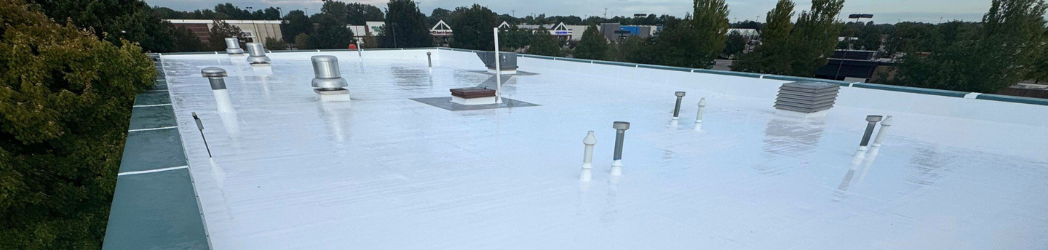
If a roof is structurally sound but aging, restoration may be the most effective way to prevent spring leaks. Fluid-applied roofing systems create a seamless, fully adhered waterproof membrane across the roof surface.
Specifically, these systems:
- Eliminate seam-related weak points
- Seal existing cracks and penetrations
- Flex with temperature changes
- Reinforce existing roofing membranes
- Provide long-term weather protection
When you choose to restore, you’re no longer reacting to leaks, you’re actively preventing them from forming.
How White Hat Industrial Supports Leak Prevention
At White Hat Industrial, we help owners evaluate their roofs objectively and determine the best path forward. Whether that’s through targeted repairs, restoration, or long-term planning, we’re always focused on helping our customers meet their goals.
When you partner with us, we’ll help you:
- Identify leaks before it’s too late
- Extend the lifespan of your roof strategically
- Reduce unnecessary replacement
- Protect your building as a long-term asset
We can even help you identify if restoration is a viable option for your buildings.
Want to work with a fluid-applied roof restoration specialist?
Our team of roof restoration and fluid-applied roofing system specialists partner with customers nationwide to provide high-performing roofing solutions.
Simply call us at 937.909.9030 or contact us via email. You can also follow us on LinkedIn and Facebook to learn more about us and our work.
Related Articles
Is Now the Right Time of Year to Restore a Commercial Roof?
Timing matters for commercial roof restoration. Things like weather, roof condition, budget cycles, and operational needs all play a role...

What Are the Signs My Commercial Roof Is Failing?
Commercial roofs rarely fail all at once. More often, they send early warning signs that are subtle at first, then...

Can I Extend the Life of My Roof Instead of Replacing It?
For many commercial building owners and facility managers, full roof replacement feels inevitable and expensive. But in reality, replacement is...